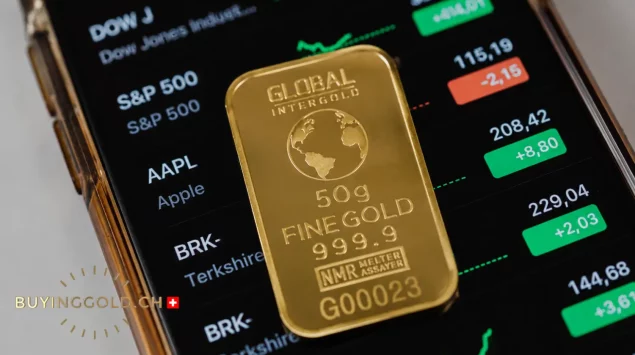

Physical gold continues to appeal to investors looking for a stable, tangible safe-haven asset recognised all over the world. But when it comes to buying a gold bar, one question always comes up: which weight should you choose? From 1 g mini bars to large 1 kg formats, each option has its own advantages, limitations, liquidity and premiums.
Today, the Swiss market makes it easy to access different formats through specialised platforms where you can buy gold. Yet many buyers still hesitate between small, flexible bars and larger, more cost-efficient ones.
In this complete guide, you will learn how to choose the ideal bar weight according to your budget, your investment strategy, your need for liquidity and your long-term goals.
Why is the weight of a gold bar so important?
The weight of a bar directly affects several key factors:
- the total purchase price;
- the premium applied;
- how easy it is to resell;
- storage;
- how divisible your holdings are;
- financial flexibility.
In reality, there is no universal “best” format. Everything depends on the investor’s profile.
Some people prefer to buy several small bars to keep maximum flexibility. Others choose large bars to optimise the price per gram.
To better understand the different formats available on the Swiss market, see the complete guide to gold bars.
Small bars: maximum flexibility
1 g bar: ideal for getting started
The 1 g fine gold bar is very popular with new investors.
Advantages
- accessible budget;
- perfect for discovering gold investment;
- easy to give as a gift;
- excellent divisibility.
Disadvantages
The main drawback is the very high premium. The smaller the bar, the more manufacturing, packaging and certification costs weigh on the final price.
In other words, the price per gram is significantly higher than for a large bar.
This format is best suited to:
- small budgets;
- gradual purchases;
- gifts with lasting value.
2 g bar: the small-budget compromise
The 2 g fine gold bar is often a first step up.
You keep:
- good accessibility;
- excellent liquidity;
- very easy resale.
But with a slightly more attractive premium than a 1 g bar.
This format particularly appeals to investors who want to build up holdings gradually without tying up large sums.
5 g bar: the popular format
The 5 g fine gold bar is one of the best-selling formats in Europe.
Why?
Because it balances:
- a reasonable price;
- high liquidity;
- an acceptable premium;
- simple storage.
For many private investors, it is the first serious entry point into physical gold.
Mid-size formats: the best balance
10 g bar: the balance between cost and liquidity
The 10 g fine gold bar is often considered an excellent compromise.
Why is this format so popular?
Because it combines:
- a lower premium;
- easy resale;
- a sufficiently significant value;
- good flexibility.
This format becomes very attractive for regular investors who want to build a solid gold reserve over several years.
20 g bar: a smart step up
The 20 g fine gold bar begins to fit into a more advanced wealth-building approach.
Here, premiums become even more competitive.
This format is particularly suitable for:
- long-term investors;
- cautious profiles;
- people who want to protect their capital against inflation.
In addition, this type of bar remains relatively easy to resell thanks to strong international demand.
50 g bar: the real investment threshold
The 50 g fine gold bar often marks an important transition.
From this level onwards:
- the price per gram becomes significantly more attractive;
- premiums fall;
- the investment becomes more strategic.
Experienced investors appreciate this format because it offers:
- excellent value density;
- compact storage;
- strong worldwide recognition.
The 100 g bar: the favourite of serious investors
The 100 g fine gold bar is extremely popular in Switzerland.
And that is no coincidence.
Why is it so successful?
Because it offers:
- very good value per gram;
- international liquidity;
- a reduced premium;
- an excellent balance for your assets.
It is often the preferred format for investors who want to:
- secure part of their wealth;
- diversify their assets;
- keep a reserve that can easily be mobilised.
The 1 kg bar: for large investors
The one-kilogram bar is the institutional standard.
Its main advantages
- extremely low premium;
- optimal cost per gram;
- the format used by banks and large fortunes.
But beware of its limits
A 1 kg bar:
- is very expensive;
- is less divisible;
- requires secure storage;
- can be harder to resell quickly to a private buyer.
This format is mainly aimed at:
- wealthy investors;
- companies;
- advanced wealth strategies.
To understand the rules that apply to buying and international trade, read about the rules and regulations of the gold bar trade by country.
Premium: understanding the real difference between formats
What is the premium?
The premium is the difference between:
- the spot price of gold;
- and the actual price paid by the buyer.
This difference includes:
- manufacturing;
- transport;
- certification;
- the dealer’s margin.
Why do small bars cost more per gram?
Let’s take a simple example.
Making a 1 g bar requires almost as much:
- quality control;
- packaging;
- logistics;
- certification
as a larger bar.
The result:
- the smaller the format;
- the higher the premium.
That is why long-term investors often favour 20 g, 50 g or 100 g formats.
Liquidity: which bar is easiest to resell?
Liquidity is how easily you can sell your gold quickly.
The most liquid formats
Bars of:
- 5 g;
- 10 g;
- 20 g;
- 50 g;
- 100 g
are generally the easiest to resell.
They attract:
- private individuals;
- investors;
- collectors;
- some professionals.
Are small formats better?
Yes and no.
Yes:
- they are more accessible;
- they interest more buyers.
No:
- their high premium sometimes reduces profitability.
The ideal approach is often to mix several formats.
Which strategy suits your profile?
Small budget
Favour:
- 1 g;
- 2 g;
- 5 g.
This allows you to:
- buy gradually;
- smooth out prices;
- ease into physical gold.
Regular investor
The formats:
- 10 g;
- 20 g;
- 50 g
often offer the best compromise between cost and flexibility.
Long-term wealth strategy
Bars of:
- 100 g;
- 250 g;
- 500 g;
- 1 kg
make it possible to greatly reduce premiums.
Storage: an often underestimated criterion
Buying physical gold also means thinking about storage.
To protect your assets effectively, read this complete guide to storing gold bars in Switzerland.
The most common solutions
- bank safe deposit box;
- secure private vault;
- outsourced storage;
- high-security home safe.
The larger the bar, the higher the security stakes.
And what about silver?
Many investors also diversify with physical silver.
The 1000 g silver bar particularly appeals to those looking for:
- a lower entry ticket;
- industrial potential;
- diversification that complements gold.
Common mistakes when choosing a bar
Buying on price alone
The cheapest option is not always the most profitable.
You also need to consider:
- liquidity;
- ease of resale;
- the premium;
- divisibility.
Choosing a format that is too large
A 1 kg bar may seem cost-effective… until you need to sell only a small part of your capital.
In that case, mid-size formats become much more practical.
Ignoring certification
A bar should always come:
- from a recognised refinery;
- with a certificate;
- in a secure blister pack.
Should you buy several small bars or one large bar?
This is probably THE most frequently asked question.
The advantages of small bars
- greater flexibility;
- simpler resale;
- accessibility;
- diversification.
The advantages of large bars
- lower premium;
- optimised cost;
- more compact storage.
The best compromise for most investors
In practice, many experts recommend:
- several 10 g bars;
- 20 g;
- 50 g;
- or 100 g.
This approach makes it possible to:
- optimise premiums;
- maintain good liquidity;
- better manage a possible partial resale.
To discover more specialised content, also explore our articles about gold ingots.
What is the best compromise for your investment?
Choosing the right bar weight depends above all on your personal strategy, your budget and your long-term vision. Small formats such as 1 g or 5 g offer excellent flexibility and make it easy to get started. Mid-size formats such as 10 g, 20 g or 50 g often represent the best balance between liquidity and profitability. As for large bars from 100 g to 1 kg, they mainly appeal to experienced investors looking to reduce premiums.
The smartest approach is generally to diversify formats in order to combine flexibility, security and cost optimisation. In an uncertain economic climate, physical gold continues to play its role as an essential safe-haven asset for protecting and passing on wealth.