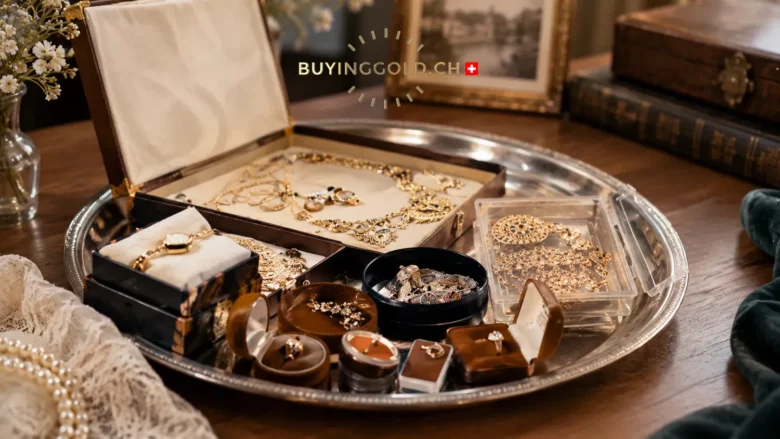
An inherited coin collection, old gold rings or intricately crafted pieces of jewelry can have considerable financial and sentimental value. But how can you determine whether they are ordinary scrap gold, rare collector's items or valuable antiques? And what legal steps are required before selling inherited items?
In Switzerland, heirs should first clarify ownership, check any tax obligations and determine the actual value of the items. Careful preparation helps avoid poor decisions and ensures that the estate can be divided appropriately or sold at a good price.
1. Clarify Ownership and the Estate
Before selling inherited gold coins, antique jewelry or other valuables, you should make sure you are legally entitled to dispose of them.
First, check the will, any inheritance agreement and the available estate documents. If there are several heirs, the items may belong to the estate jointly. In this case, a sale should not take place without the required consent.
Create an inventory containing the following information:
- Type and number of coins, jewelry pieces and other valuables
- Available purchase receipts, certificates and proof of origin
- Known appraisals or previous insurance valuations
- Distinctive features such as hallmarks, engravings or special coin designs
For complex estates, consulting a notary or a professional specializing in inheritance law may be advisable.
Legal notice: Depending on the circumstances, official inventory proceedings or additional protective measures may be required. Contact the competent cantonal authority before disposing of estate assets.
2. Consider Inheritance Tax in Switzerland
The tax treatment of an inheritance depends primarily on the canton, the relationship between the deceased and the heir, and the value of the estate.
Switzerland has no general inheritance tax at the federal level. The cantons regulate inheritance tax differently. In most cantons, spouses and direct descendants are exempt from tax under certain conditions. However, the specific rules and exceptions should always be checked individually.
Further information is available on the official Swiss information portal covering inheritance tax.
Keep any existing appraisals and documents relating to the estate's value. For a substantial collection, a documented valuation can help explain the value of individual items to co-heirs or tax authorities.
3. Determine the Actual Value of Coins and Jewelry
Not every old gold item is automatically a collector's piece. Conversely, an unremarkable-looking coin may be worth considerably more than its metal content because of its rarity.
When assessing value, distinguish between material value and collector value.
| Valuation factor | Impact on value |
| Precious metal content | Gold content, fineness and weight determine the material value. |
| Rarity | Limited editions or rare minting variations can increase collector value. |
| Condition | Scratches, wear, damage and improper repairs affect the valuation. |
| Provenance | Documents, previous owners and a verifiable history may be relevant. |
| Demand | Popular coin series and sought-after jewelry can command additional premiums. |
| Design and craftsmanship | For antique jewelry, craftsmanship, period and any gemstones may play a role. |
Do Not Sell Gold Coins by Weight Without Checking Their Value
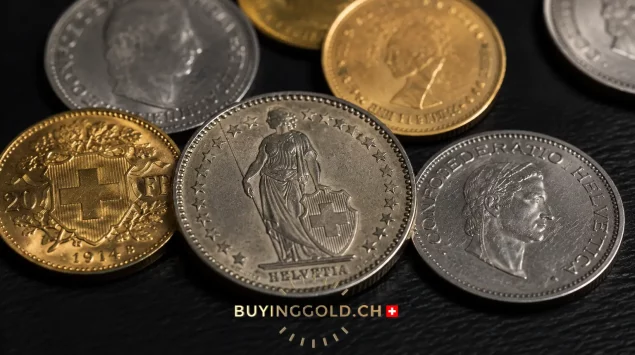
A detailed assessment is worthwhile when dealing with an inherited coin collection. Swiss Vreneli coins, historical gold coins or special minting variants may have numismatic value in addition to their gold content.
Avoid cleaning or polishing coins yourself. This can damage their surfaces and reduce their collector value.
Further information is available in the buyinggold.ch article on valuation methods for coins and antiques, including authenticity and value.
Have Antique Jewelry Professionally Assessed
Several factors matter when valuing inherited rings, necklaces, brooches or pendants. These include the gold alloy, craftsmanship, age and, where applicable, the gemstones used.
For example, a hallmark reading 750 indicates a gold content of 75 percent. However, the hallmark alone guarantees neither the authenticity of the entire item nor its market value.
Have valuable or unusual pieces assessed before selling them. For initial guidance, buyinggold.ch provides information on valuing and buying back precious metal jewelry.
4. Store Inherited Valuables Properly
Until the final valuation has been completed, keep the collection as unchanged as possible. Store coins, jewelry and any accompanying documents separately and securely.
Follow these recommendations:
- Keep coins in their existing capsules or cases whenever possible.
- Protect antique jewelry from moisture, scratches and unnecessary handling.
- Store receipts, certificates and proof of origin together.
- Take photographs of individual items and their distinctive features.
- Consider insuring valuable pieces where necessary.
If you suspect an archaeological find or an especially significant historical object, seek professional advice before selling it.
5. Where Can You Sell Inherited Coins and Gold Jewelry?
Once the legal situation has been clarified and the items have been valued, several options are generally available. The most suitable choice depends on the type of items and the desired selling price.
A precious metals dealer can be a practical option, particularly for gold jewelry and common gold coins. The purchase price is often based on the precious metal content, although other factors may also be considered for certain collector's items.
A specialist coin dealer or auction house may be appropriate if the collection includes rare minting variants, historical coins or jewelry of significant artistic or historical interest. A specialist appraisal helps ensure that potential collector value is not overlooked.
buyinggold.ch offers purchasing services for various precious metals and collectible items in Switzerland. You can find out more about this option on the coin collection purchasing page.
Compare several offers for valuable items. Ask how the valuation was calculated and whether the quoted price reflects only the material value or also any potential collector value.
6. Take Special Care with Historically Valuable Items
Not every old coin or antique piece of jewelry is legally classified as cultural property. However, additional regulations may apply to objects of particular archaeological, historical, artistic or scientific significance.
The Swiss Federal Office of Culture provides information about international transfers of cultural property. These rules are particularly relevant when historical objects are to be taken abroad or traded internationally.
Check the provenance before selling such items. If the origin is unclear or export restrictions may apply, seek a professional assessment.
Checklist: What Heirs Should Do Before Selling
| Step | What needs to be done? |
| Clarify ownership | Check the will, inheritance documents and any claims by co-heirs. |
| Inventory the items | Photograph and list coins, jewelry and other valuables. |
| Secure documents | Keep certificates, purchase receipts and proof of origin. |
| Determine value | Have the material value and potential collector value assessed separately. |
| Clarify tax matters | Check cantonal regulations and any potential tax liability. |
| Compare offers | Contact at least two suitable providers for valuable items. |
| Document the sale | Keep valuation records, offers and sales documents carefully. |
Turn an Inherited Item into an Informed Decision
An inherited coin collection or antique gold jewelry should not be assessed solely by weight or the first price offered. Clarifying the legal requirements, carefully documenting the items and obtaining an assessment of their actual market value provides a sound basis for making the next decision.
Whether you wish to keep the items, divide them among family members or sell them, a professional valuation helps you assess their worth realistically. For gold jewelry, precious metals and suitable coin collections, buyinggold.ch can be a point of contact for assessment and purchase.
Frequently Asked Questions (FAQ)
Not in every case. First, you should establish whether you are the sole person entitled to dispose of the items or whether they belong to an estate shared by several heirs. Official inventory proceedings may also restrict the disposal of certain assets. Clarify any outstanding questions with the competent authority or an inheritance law specialist.
Useful documents include proof of identity, inheritance-related paperwork, and any available purchase receipts, certificates and proof of origin. The specific documents required depend on the provider and the type of item. Particularly significant historical objects may require additional documentation.
This depends on the canton, the relationship between the deceased and the heir, and other legal requirements. There is no federal inheritance tax. Many cantons exempt spouses and direct descendants under certain conditions. Check the applicable cantonal regulations.
Key factors include weight, fineness, condition, minting year, rarity and demand. For common investment coins, the precious metal value is often the main consideration. Rare historical coins, however, may have substantial additional collector value. A specialist valuation is therefore advisable.
In principle, yes. The absence of a certificate does not automatically make a piece of jewelry unsellable. Its precious metal content and other characteristics can be professionally assessed. For antique or particularly valuable items, however, available proof of origin may still be important for the valuation.
First, ownership and the rights of each heir must be clarified. The collection can be divided among the heirs, kept jointly or sold by agreement. An independent valuation helps ensure a transparent and fair distribution.
Yes, if they fall under the applicable cultural property protection regulations. Not every old object automatically qualifies as cultural property under the law. If you are dealing with archaeological finds, unclear provenance or a planned cross-border sale, consult the relevant specialist authorities.
No. Cleaning, polishing or chemically treating coins yourself can damage their surfaces and reduce their collector value. Keep the coins in their existing condition whenever possible and leave the assessment to a qualified professional.
That depends on the item. A gold buyer can be a practical option for ordinary gold jewelry and common precious metal coins. A specialist coin dealer or auction house may be more suitable for rare coins or historically significant jewelry. Compare valuation methods and take any fees into account.
First, explore the options for purchasing coin collections and precious metal jewelry on the buyinggold.ch website. Keep any available documents ready and ask which items can be assessed. For rare or historically significant pieces, it is advisable to clarify in advance whether additional numismatic or art-historical expertise is needed.