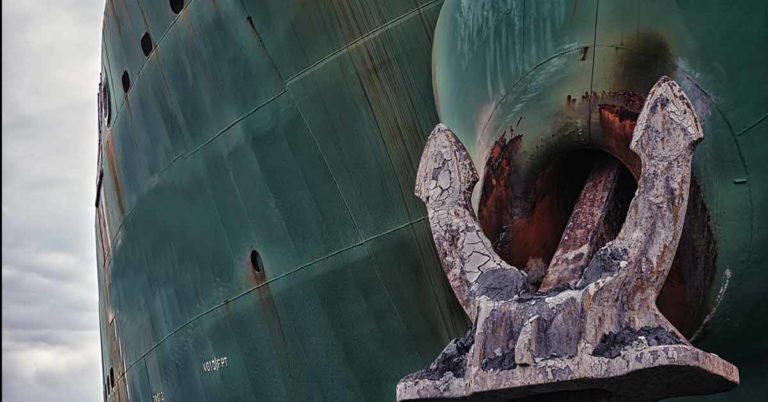
When the SS Central America disappeared beneath the raging waters of a powerful hurricane off the coast of South Carolina on September 11, 1857, it was not just a ship that was lost. Nearly 15 tonnes of gold from the California gold fields vanished with it, along with hundreds of lives and a fortune that was helping support the American economy at the time.
The 87-meter steamship, later nicknamed the “Ship of Gold,” was carrying 477 passengers, 101 crew members and a cargo that would be worth billions of dollars today. Caught in a violent storm, the crew battled for days against flooding. Eventually, the pumps failed. The SS Central America sank, and only around fifty people were rescued. More than 425 passengers and crew members lost their lives.
The consequences extended far beyond the maritime disaster itself. Many historians consider the sinking to have been one of the factors that contributed to the Panic of 1857, a severe financial crisis that affected the United States. Much of the gold on board was destined for banks and investors. Its loss further weakened an already fragile economic environment.
Lost for 130 Years
For nearly a century and a half, the wreck remained undiscovered. Its exact location was unknown, and the depths of the Atlantic Ocean seemed to make any recovery attempt impossible.
Everything changed in 1988 when treasure hunter Thomas G. Thompson launched an expedition financed by approximately $12 million from private investors.
Using advanced sonar systems and remotely operated underwater vehicles, his team eventually located the wreck at a depth of around 2,200 meters (7,200 feet).
What lay on the ocean floor exceeded all expectations.
Thousands of gold coins, gold dust, nuggets and hundreds of gold bars were recovered. One of the most famous discoveries was a gold ingot weighing approximately 40 kilograms, often regarded as one of the most remarkable gold artifacts ever recovered from a shipwreck.
Many of the famous American $20 gold coins, known as Double Eagles, were found in extraordinary condition. Some later achieved record prices at auction.
From Treasure Hunter to Fugitive
The story could have ended there. Instead, it took a turn worthy of a Hollywood screenplay.
Insurance companies claimed ownership rights to part of the treasure. At the same time, disputes emerged between Thompson and the investors who had financed the expedition.
Although American courts initially granted Thompson significant rights over the discoveries, he later sold gold artifacts worth more than $50 million without properly sharing the proceeds with his financial backers.
As lawsuits multiplied, Thompson disappeared without a trace.
For ten years, he successfully avoided authorities. It was not until 2015 that he was located and arrested in Florida.
Even today, rumors persist regarding a portion of the recovered treasure that remains missing. According to some estimates, gold coins worth millions of dollars may still be unaccounted for. Thompson reportedly refused for years to reveal their whereabouts, leading to extended periods of imprisonment.
New Expeditions Reveal More Surprises
While legal battles continued, another team led by scientist Bob Evans carried out further explorations of the wreck site.
These expeditions uncovered more than additional gold.
Among the most moving discoveries were the passengers’ personal belongings: pocket watches, jewelry, clothing, letters and even daguerreotypes, some of the earliest photographic images ever created.
Gradually, the treasure hunt evolved into a major historical project. Attention shifted from gold bars and coins to the lives of the men, women and children who had been aboard the vessel in 1857.
After years of conservation and restoration, many of these artifacts were displayed to the public for the first time in 2018. Visitors were able to see not only extraordinary wealth but also unique glimpses into daily life during the era of the California Gold Rush.
A Window Into the Past
Despite their immense historical significance, most of the recovered artifacts did not become permanent museum exhibits. A large portion was sold to private collectors for substantial sums.
The rarity of these objects, their remarkable provenance and the dramatic story surrounding them have made them highly sought after.
This is precisely what makes the SS Central America so fascinating. It is not simply a shipwreck filled with gold. Its story reflects the spirit of exploration, economic ambition, human tragedy and a treasure that continued to capture public attention for decades after its recovery.
An Echo From the Deep
Few treasures in the world combine history, technology, tragedy and wealth as powerfully as the SS Central America.
Even today, nearly 170 years after its sinking, it remains a symbol of a timeless truth: some secrets of the ocean can be recovered, but their stories can never be completely revealed.
EYS/ATC