
- Home
- Buy Gold
- Sell Your Silver
- Gold Prices
- Buy Platinium
- Buy Tin
- Gold bars
- Buy Diamond
- Buy collectibles coins
- Industrial Waste
- Buy watch
- Invest
- Expertise
- OUR SHOPS
- News
- Things to know
- Informations on Gold
- Swiss post – postal gold
- Luxury accessoires
- About us
- Statuts – the Team
- Contact
- Job
- Privacy notice
- FAQ
Buying gold
-
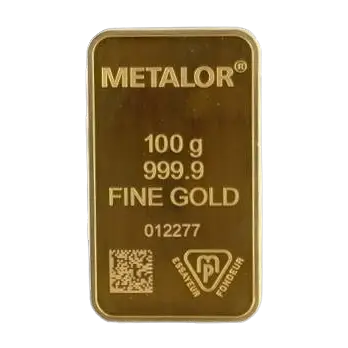
Gold ingot 100 g
- Total weight
- 100 g
- Fine gold content
- 100 g
- Fineness
- 999.9/1000
-
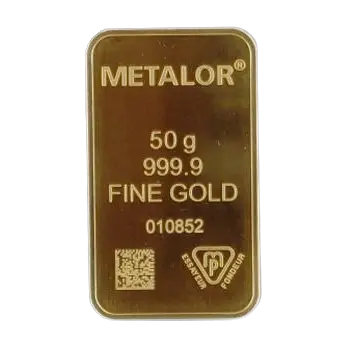
Gold ingot 50 g
- Total weight
- 50 g
- Fine gold content
- 50 g
- Fineness
- 999.9/1000
- Dimensions
- 44.2 × 25.5 × 2.6 mm
-
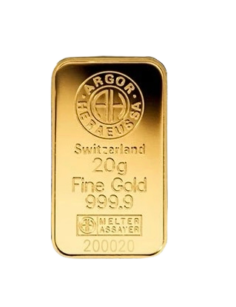
Gold ingot 20 g
- Total weight
- 20 g
- Fine gold content
- 20 g
- Fineness
- 999.9/1000
- Dimensions
- 39 × 22 × 1.3 mm
-
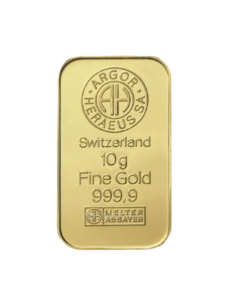
Gold ingot 10 g
- Total weight
- 10 g
- Fine gold content
- 10 g
- Fineness
- 999.9/1000
- Dimensions
- 25.5 × 15.5 × 1.3 mm
-
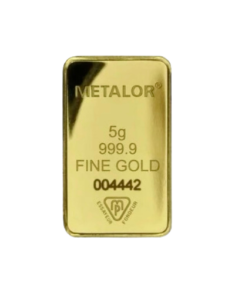
Gold ingot 5 g
- Total weight
- 5 g
- Fine gold content
- 5 g
- Fineness
- 999.9/1000
- Dimensions
- 25.5 × 15.5 × 0.65 mm
-
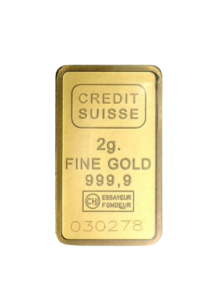
Gold ingot 2 g
- Total weight
- 2 g
- Fine gold content
- 2 g
- Fineness
- 999.9/1000
-
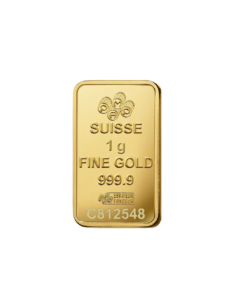
Gold ingot 1 g
- Total weight
- 1 g
- Fine gold content
- 1 g
- Fineness
- 999.9/1000
- Dimensions
- 15 × 8.4 × 0.4 mm
-
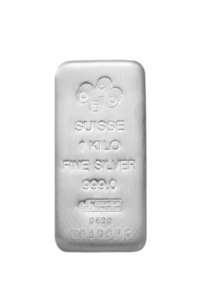
Silver ingot 1000 g – Metalor (Switzerland)
- Total weight
- 1000 g
- Fine silver content
- 999 g
- Fineness
- 999/1000
- Dimensions
- 118 × 54 × 16 mm
Buying Gold Bars in Switzerland
Buying gold bars in Switzerland means acquiring physical gold in a standardized form, typically with a purity of 999.9, recognized and traded internationally. Unlike jewelry, a gold bar is a pure investment asset—its value is determined directly by the gold price, its weight, and its purity.
Switzerland holds a unique position in the global gold market. A significant share of the world’s gold refining is carried out in the country by internationally respected refineries such as PAMP, Valcambi, and Argor-Heraeus. This concentration of expertise contributes to consistently high standards and strong global confidence in Swiss gold products.
Buying gold bars in Switzerland also offers the advantage of a stable regulatory environment and favorable taxation. Investment-grade gold is generally exempt from VAT, making it particularly attractive to private investors and wealth preservation strategies.
Available Sizes and Formats
Gold bars are available in a wide range of weights and formats. The right choice depends on both your budget and your investment objectives.
Common Gold Bar Sizes
- 1g, 2g, 2.5g – affordable entry-level bars
- 5g, 10g, 20g – balance between accessibility and value
- 1 ounce (31.1g) – international standard
- 50g, 100g, 250g – intermediate investment sizes
- 500g, 1kg – preferred by experienced investors
The price of a 100g gold bar in Geneva or the cost of a 1kg gold bar in CHF will depend on the current market price of gold and the premium charged by the seller.
Indicative Comparison Table
| Weight | Typical Use | Liquidity | Budget Level |
| 1g–10g | Beginner investor | Very high | Low |
| 20g–100g | Regular investor | High | Medium |
| 250g–1kg | Wealth preservation | Moderate | High |
What Influences the Price of a Gold Bar?
The price of a gold bar is not determined solely by the international gold price.
Key Factors
- Gold spot price – global quotation in USD
- Exchange rate – conversion into CHF
- Premium – manufacturing and distribution costs
- Purity – typically 999.9 fine gold
- Certification – LBMA accreditation or equivalent
The price of a 24-carat gold bar follows a clear structure. The daily value reflects both international market conditions and local factors.
Certification and Quality
A certified gold bar should include several essential features:
- Unique serial number
- Refinery name and hallmark
- Assayer and refiner designation
- Purity indication
- Sealed packaging or certificate
These elements help verify authenticity and facilitate future resale. Purchasing a gold bar without proper certification may create challenges when selling it later.
Buying Gold Bars Safely
When purchasing physical gold bars, a few simple precautions can help ensure a secure transaction:
- Choose a reputable dealer
- Verify certification and authenticity
- Compare current market prices
- Favor widely traded and liquid formats
To understand the rules, see gold bullion trade regulations.
Storage and Security
Once purchased, gold bars should be stored securely.
Common Storage Options
- Home safe
- Bank safety deposit box
- Professional secure storage facility
The most suitable option depends on the value of your holdings and the level of protection you require. The primary goal is to preserve your assets over the long term.
To learn more, see storing gold bars in Switzerland.
Liquidity and Resale
One of gold’s greatest advantages is its liquidity. Certified gold bars can generally be resold quickly and efficiently, especially in major Swiss cities such as Geneva and Lausanne.
Gold bar buyback services in Lausanne and Geneva typically evaluate bars according to three main criteria:
- Weight
- Purity
- Current market price
The more standardized and widely recognized the bar, the easier and faster the resale process tends to be.
Investing Wisely in Gold Bars
Investing in gold bars can help diversify an investment portfolio. Gold is widely regarded as a safe-haven asset and is often used to hedge against inflation, currency fluctuations, and economic uncertainty.
Some investors prefer smaller bars because of their flexibility and easier partial liquidation. Others choose 1kg bars to benefit from lower premiums relative to weight. There is no single ideal solution—the best choice depends on your investment goals, budget, and time horizon.
Gold as a Long-Term Store of Value
Buying gold bars in Switzerland ultimately reflects a straightforward principle: converting a portion of capital into a tangible asset recognized around the world.
In an evolving financial environment, many investors appreciate the stability and permanence that physical gold can offer.
No exaggerated promises. No blind speculation.
Simply a precious metal, a defined weight, and a market value.
And for many, a lasting expression of wealth preservation.
Frequently Asked Questions
1. What is the price of a gold bar in Switzerland?
The price depends on the real-time gold market price expressed in CHF, plus the dealer’s premium. As a result, it changes daily.
2. Where can I buy gold bars in Switzerland?
Gold bars can be purchased from specialized precious metal dealers, authorized retailers, and reputable online platforms. Geneva remains one of Switzerland’s leading centers for gold trading.
3. Are gold bars exempt from VAT?
Yes. In Switzerland, investment-grade gold is generally exempt from VAT, making it a tax-efficient investment vehicle.
4. Which gold bar size is best for investing?
Smaller bars offer greater flexibility and accessibility, while larger bars typically benefit from lower premiums per gram. The right choice depends on your budget and investment strategy.
5. How do I sell a gold bar?
Gold bars can be sold through professional precious metal dealers. The resale value is based on the current gold price, the bar’s weight, purity, and certification. Certified bars are generally easier to resell.
